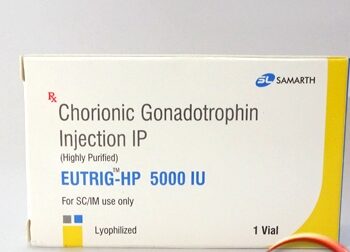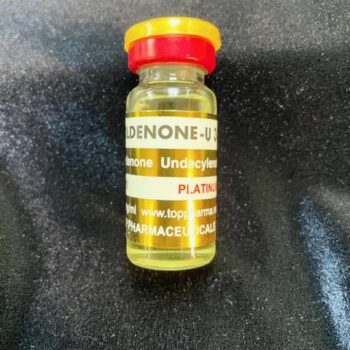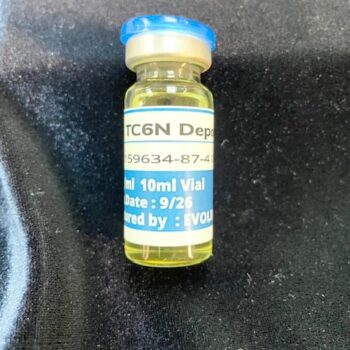
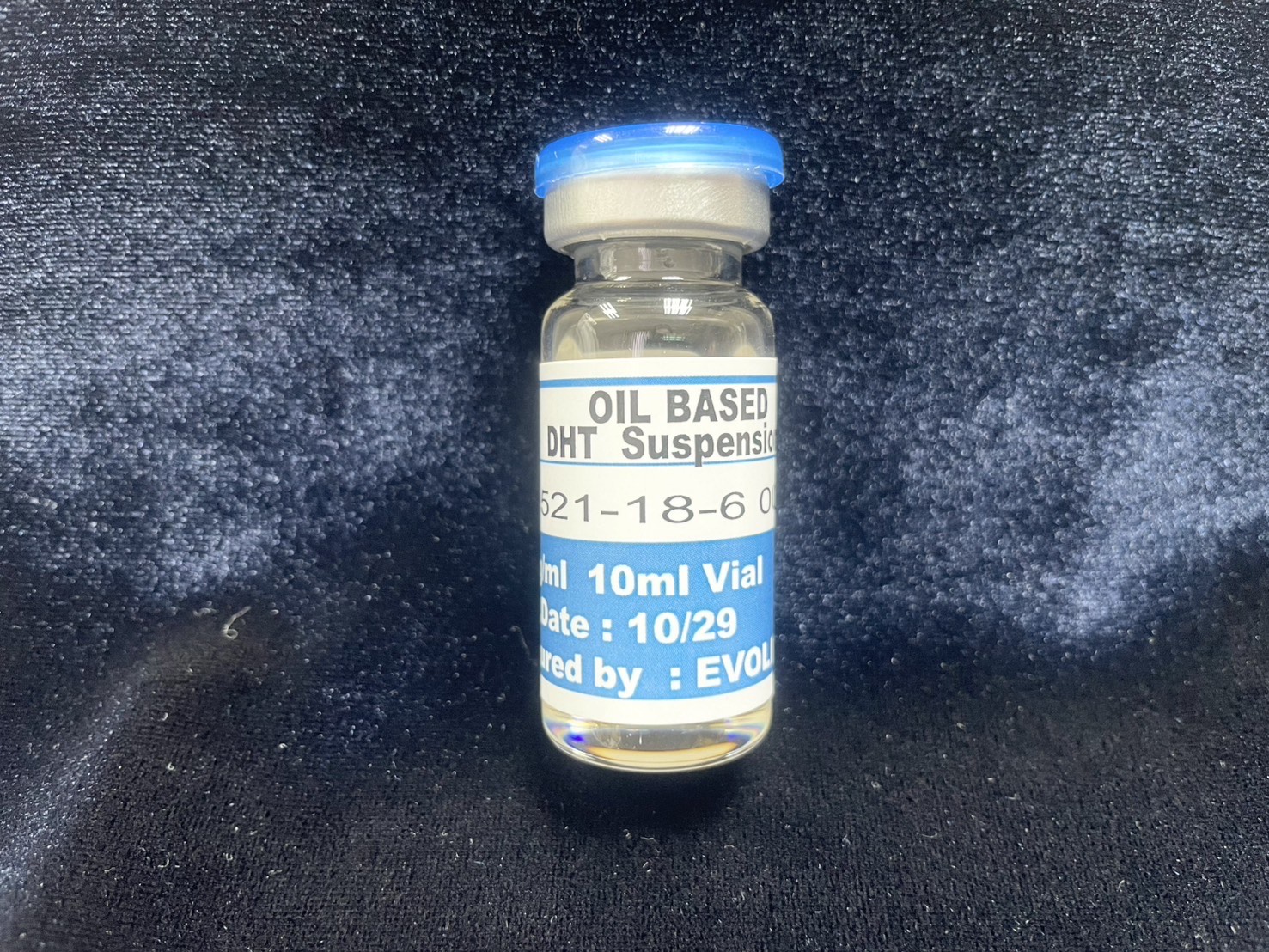
**For Customers Shipping to Japan**
If your shipment is found to be an injectable drug at customs, you will be required to present a Pharmaceutical Inspection Certificate starting in 2020.
If you are unable to provide one, please return the item to the sender.
We will notify you once the product arrives at our company, and we will reship it after receiving your payment.
Oil Based DHT Suspension 100
Oil based DHT suspension
Anabolic/Androgenic ratio: 90-100/100-2300
Effective dose (men): 25-100mg once per day
Effective dose (women): Not recommended
Effective period: +/- 1-2 days
Detectable period in serum: 17-50 days+
Does DHT affect muscle growth? Is it better than testosterone?
Dihydrotestosterone (DHT) is essentially an androgen derived from testosterone that has a significant impact on male sexual characteristics.
DHT is associated with a variety of physiological functions, but its effect on muscle growth is still a subject of debate.
Considering the interest of the fitness and bodybuilding community, let’s unravel the mystery surrounding DHT, unravel how it affects muscle growth, and analyze the opinions of experts.
Key insights:
DHT is a by-product of the testosterone hormone, but with a more anabolic nature.
Numerous studies suggest that DHT affects muscle growth in multiple ways.
While you can increase the production of DHT through certain exercises and diet, it needs to be balanced to avoid side effects from overproduction of DHT.
Excess DHT can lead to male hair loss and prostate health issues.
Here is all the research findings on the relationship between DHT and muscle growth to date.
Does DHT affect muscle growth?
Yes, DHT does affect muscle growth. Although many bodybuilders may not agree with this, there is a strong link between DHT, muscle, and strength.
In fact, DHT is an androgen, a by-product of testosterone that is essential for an energetic and athletic body.
The only reason DHT is considered irrelevant to muscle growth is because of its high anabolic to androgenic ratio.
In addition, about 10% of testosterone is converted to estrogen by DHT-derived 5-alpha reductase (5-AR). Therefore, there is a theory that DHT has a negative effect on muscle mass.
However, according to a report in “Nature Reviews Urology,” muscle mass in men is not affected by the inhibition of 5-alpha reductase.
In fact, there are many studies that show that DHT has a positive effect on muscle growth and how it affects it.
#1. Important for whole-body fat utilization during exercise
DHT plays a key role in processing energy, including the oxidation of fats and carbohydrates.
The study revealed the effects of inhibiting DHT formation during moderate-intensity running exercise on energy expenditure, fat and carbohydrate oxidation. The observations are published in the Journal of Exercise Nutrition & Biochemistry.
According to the analysis of the study, changes in DHT production during exercise suppressed fat utilization throughout the body and also increased carbohydrate oxidation.
Therefore, based on this study, it can be said that DHT is important for fat utilization as fuel during exercise. Proper fat utilization helps in the development of lean muscle.
Moreover, it is equally important for increasing endurance and performing endurance training.
#2. DHT enhances muscle strength via muscle fiber androgen receptors
Muscle hypertrophy and muscle strength are interdependent. If muscles are weak, you can only achieve a certain amount of muscle growth.
According to a report in the Cell Press Journal, implantation of biodegradable pellets containing 10 mg of DHT in 9-week-old female mice increased grip strength.
Not only this, but body weight and skeletal muscle weight also increased after DHT treatment.
Therefore, the study concludes that muscle mass is controlled by DHT, whereas grip strength is controlled by muscle fiber androgen receptors and DHT.
#3. Promotes Amino Acid Absorption
If you know anything about bodybuilding or fitness, you must know or at least have heard of amino acids.
They are one of the pillars of improved training performance, muscle recovery, and muscle growth.
Interestingly, according to The Journal of Physiology, DHT increases protein synthesis and the transport of essential amino acids in fast-contracting muscle fiber bundles.
Studies have shown that DHT increased the absorption of isoleucine and alpha-methylaminoisobutyric acid, as well as the expression of LAT-2 (a protein-coding gene).
#4. Causes Skeletal Muscle Hypertrophy
Another important discovery by the Journal of Biology of Sport put all doubts to rest, and we soon discovered that there is a direct relationship between muscle growth and DHT.
We investigate the effects of exogenous androgens and resistance exercise on skeletal muscle hypertrophy. In this study, 24 male Sprague-Dawley rats were randomly assigned to sham surgery and dihydrotestosterone (DHT) implants.
According to the data, DHT causes skeletal muscle hypertrophy. Moreover, exercise has a synergistic effect on DHT-induced hypertrophy.
#5. DHT promotes protein synthesis and ATP production
Dihydrotestosterone, or DHT, has more potential than you might imagine when it comes to muscle growth.
It can affect protein synthesis, one of the main factors in muscle growth.
In addition, it also contributes to ATP, providing the body with the fuel it needs for muscle contraction.
According to evidence published in the Journal of Molecular Endocrinology, DHT promotes protein synthesis and STP production.
It also has a significant impact on cell signaling, cell proliferation, and muscle contraction and relaxation.
Considering all the above findings and explanations, it is easy to conclude that DHT does indeed build muscle. DHT has a significant effect on muscle growth drivers such as protein synthesis, ATP, muscle hypertrophy, cell proliferation, amino acid absorption, and strength.
Nevertheless, people often compare it to testosterone, the most talked about muscle building hormone.
Is DHT more effective than testosterone for muscle building?
Both DHT and testosterone are androgens and while they have similarities, they also have distinct differences.
It is widely known that testosterone is an anabolic hormone. But for those of you who don’t know, DHT is about 5 times more androgenic than testosterone.
It also acts to protect against estrogen. It directly inhibits estrogen activity in tissues by antagonizing the activity of aromatase enzyme.
In fact, evidence shows that DHT promotes protein synthesis and imports essential amino acids into twitching muscle fiber bundles, whereas testosterone does not.
So based on the above points, DHT seems to be a much more promising muscle building hormone compared to testosterone.
But why is it not given much consideration? Because muscle tissue has very little 5-alpha reductase (5-AR), so there is very little DHT in muscle.
Furthermore, any DHT formed in or that reaches muscle is quickly inactivated by an enzyme called 3-alpha-hydroxysteroid reductase.
Testosterone, on the other hand, is a prohormone that is converted to active DHT by 5-AR and interacts with the receptor.
Testosterone is the most active androgen in muscle, but DHT is crucial for the full performance effect of the testosterone hormone.
So, the conclusion is that while both DHT and testosterone are important for building muscle, it is testosterone that is the most active.
Increasing DHT (the king of androgens) has been all the rage lately. DHT is the most powerful of the androgens and is much more androgenic than anabolic, i.e. fat loss promoting, effects.
DHT:
Inhibits the conversion of pre-adipocytes to mature adipocytes.
It promotes fat cell apoptosis (cell death). Essentially, DHT aids in the destruction of fat cells.
It promotes lipolysis and beta-oxidation (the release of fat from fat stores and its subsequent utilization).
It inhibits adipogenesis (the formation of new fat).
It inhibits aromatase, lowers estrogen levels, and inhibits vasopressin. This not only gives you a dry, leaner appearance, but also boosts your self-confidence. This is because vasoconstriction promotes water retention, anxiety, and emotional and defensive behavior.
It promotes nitric oxide synthesis by increasing eNOS, which promotes vasodilation.
DHT and Muscle Growth and Fat Loss
Here are three studies that show that DHT promotes muscle growth and fat loss.
Taking 70 mg of DHT daily for three months resulted in a 2 kg increase in lean body mass and a 2 kg loss in fat.
Taking 70 mg of DHT daily for two years resulted in a 2.4% increase in lean body mass and a 5.2% decrease in fat mass.
In men with partial androgen deficiency, daily administration of 70 mg of DHT for three months had no effect on body composition.
The reason why DHT does not promote muscle growth or fat loss may be because a high dose of 70 mg per day significantly reduces testosterone production. Testosterone and DHT synergistically promote muscle growth and fat loss, with testosterone being more important than DHT in this regard.
Studies have shown that men with benign prostatic hyperplasia who are treated with 5-alpha reductase inhibitors do not experience a loss of muscle mass. Similarly, patients with congenital 5-alpha reductase deficiency also have normal muscle development during puberty.
However, when testosterone injections were combined with a 5-AR inhibitor such as dutasteride, muscle gain was less in the dutasteride group, indicating that DHT is required for muscle growth.
Interestingly, the study revealed that DHT promotes protein synthesis and transport of essential amino acids to fast-twitch muscle bundles, whereas testosterone does not. This supports the possibility that DHT may be a better hormone than testosterone for treating amyotrophic lateral sclerosis.
This study found that DHT has a strong anti-catabolic effect in HIV patients. Patients with low DHT but normal testosterone lost significantly more body weight (lean body mass) than patients with normal testosterone and DHT.
DHT acts as an adaptogen and is anti-catabolic by inhibiting the increase in ACTH in response to stress. This helps keep cortisol low and preserve muscle.
In addition, DHT is more effective at increasing muscle strength than testosterone. A lack of DHT leads to loss of muscle strength. Remember that heavy lifting is more effective at building muscle, and DHT enhances that effect.
Conclusion
So is it worth optimizing DHT? Of course!
It doesn’t do much for fat burning, but it is anti-catabolic and helps improve your health and mental state. The added benefit of feeling good mentally is enough to keep DHT high.
Not only that, DHT also helps retain water, making your figure look dry, hard, and lean.
Are there any side effects of increased DHT?
DHT plays an important role in various physiological functions, but excessively high concentrations can cause side effects such as:
DHT acts as an adaptogen and is anti-catabolic by inhibiting the increase in ACTH in response to stress. This helps keep cortisol low and preserve muscle.
In addition, DHT is more effective at increasing muscle strength than testosterone. A lack of DHT leads to loss of muscle strength. Remember that heavy lifting is more effective at building muscle, and DHT enhances that effect.
Conclusion
So is it worth optimizing DHT? Of course!
It doesn’t do much for fat burning, but it is anti-catabolic and helps improve your health and mental state. The added benefit of feeling good mentally is enough to keep DHT high.
Not only that, DHT also helps retain water, making your figure look dry, hard, and lean.
Are there any side effects of increased DHT?
DHT plays an important role in various physiological functions, but excessively high concentrations can cause side effects such as:
1. Acne: Increased DHT levels stimulate sebum production, which leads to acne, especially on the face, chest, and back.
2. Hair loss: DHT is associated with male pattern baldness (androgenetic alopecia). In people who are genetically susceptible to DHT, high DHT levels can shrink hair follicles and ultimately lead to hair loss.
3. Prostate enlargement: Elevated DHT levels have been linked to benign prostatic hyperplasia (BPH), an enlargement of the prostate gland. This can lead to urinary problems.
4. Aggressive behavior: Some studies have suggested a potential link between high DHT levels and increased aggression and irritability, but the evidence is inconclusive.
5. Oily skin: Increased DHT activity can lead to excess sebum production, resulting in oily skin.